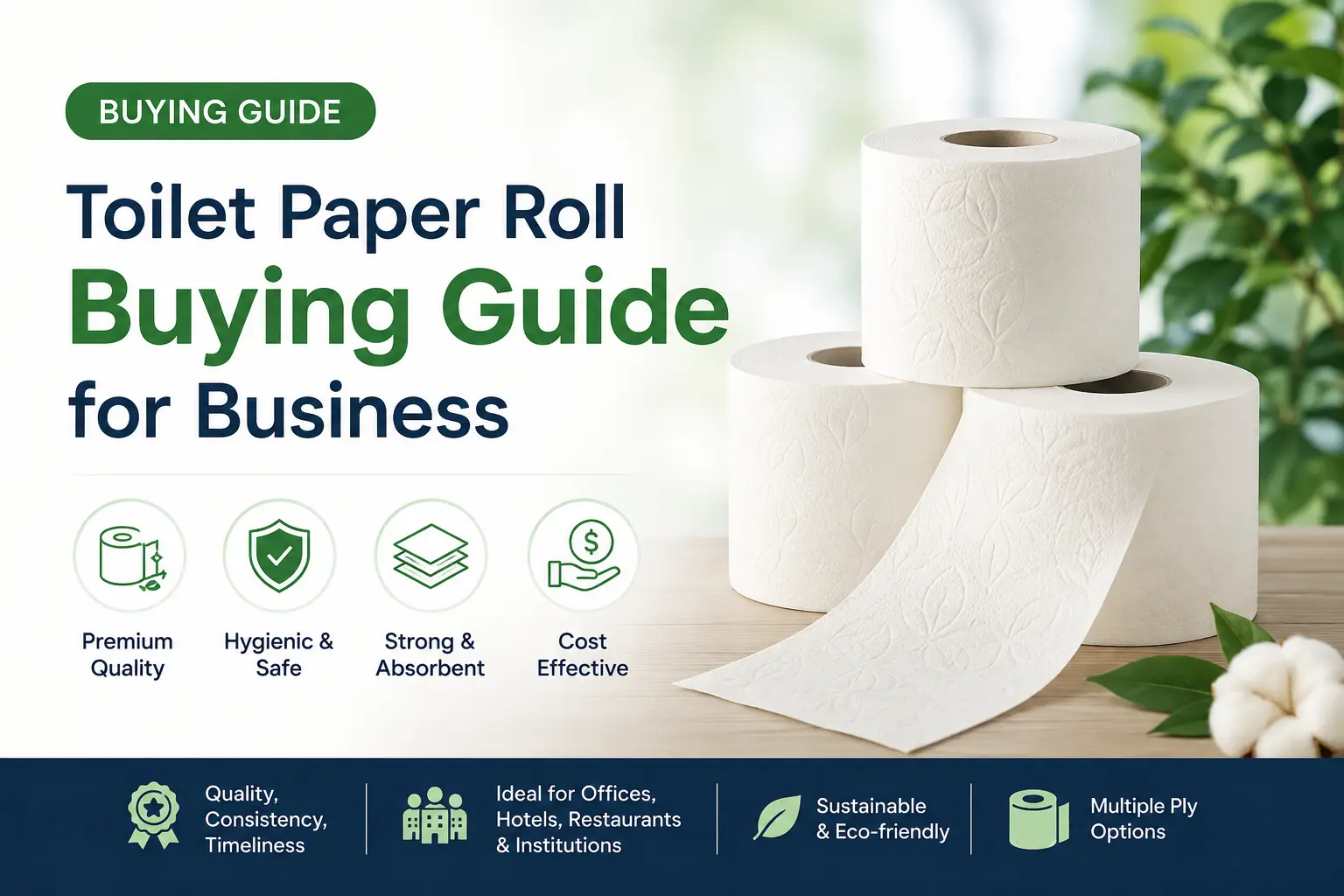
Toilet paper looks like a simple, interchangeable commodity until you're the one responsible for restroom supply across an office, hotel or restaurant. Get the spec wrong and you're either overspending on rolls that vanish too fast, or fielding complaints about dispensers jamming and running dry. Here's what actually matters when you're buying at business scale.
Sheet count and roll dimensions
Sheet count tells you how many uses you'll get per roll, but it only means something alongside sheet size. A roll with a high sheet count but small, narrow sheets can use less paper overall than a roll with fewer, larger sheets. Always ask for sheet length and width together with sheet count so you can calculate the actual paper volume you're buying, not just a headline number on the packaging.
Ply and core type
Ply affects softness, absorbency and cost the same way it does for facial tissue. Core type matters more than most buyers expect — standard cores fit most dispensers, but jumbo or coreless rolls are built for high-capacity dispensers designed to reduce restocking frequency in busy washrooms. Check your dispenser hardware before ordering rolls that won't physically fit.
Matching roll size to footfall and dispenser type
A quiet back office with a handful of staff can run comfortably on standard rolls in a manual dispenser. A high-footfall restroom — a mall, a large hotel lobby, a busy restaurant — benefits from jumbo rolls in high-capacity dispensers, which cuts down how often staff need to check and restock during peak hours. Matching roll capacity to actual usage volume is one of the simplest ways to reduce both cost and staff workload.
Bulk packaging: rolls per case
Case sizes vary significantly between suppliers, and this affects your storage planning as much as your price per roll. A supplier offering a lower price per roll but only in very large case sizes may not suit a business with limited storage space. Ask for rolls-per-case and case dimensions upfront so you can plan storage and reorder cycles realistically.
Practical Tip
Compare suppliers on cost-per-use, not cost-per-roll. Divide the case price by total sheet count across all rolls in the case to get a true per-use figure. A roll that looks cheaper on the shelf can easily work out more expensive per use if it has a lower sheet count or smaller sheet size.
Balancing cost-per-roll against cost-per-use
It's tempting to sort supplier quotes by price per roll, but that number alone can mislead. A slightly pricier roll with a meaningfully higher sheet count often costs less per use, which matters far more over months of consumption than the number on the invoice line. Run the cost-per-use calculation before you commit, especially when comparing across different roll sizes and formats.
At Shree Enterprise, our White Leaf toilet paper rolls come in specifications built for real business usage, with clear sheet count and packaging details on every order. If you'd like help matching roll size to your footfall, get in touch for a quote and we'll recommend the right fit.