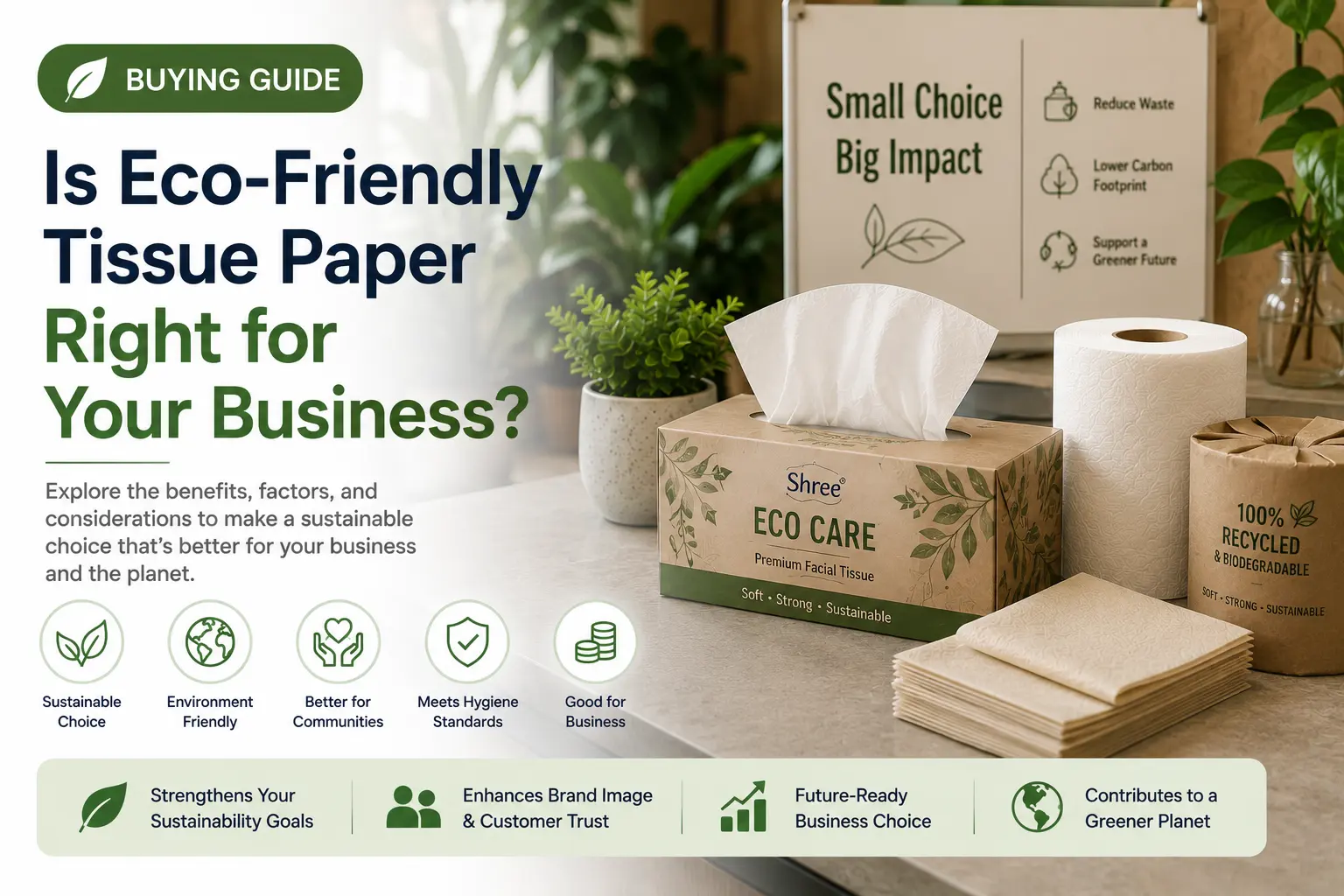
"Eco-friendly" gets used loosely enough in the tissue paper market that it's worth understanding what the terms actually mean before you factor sustainability into a buying decision. This isn't about telling you eco-friendly is right or wrong for your business — it's about giving you the vocabulary and the questions to make an informed call for your specific situation.
Recycled pulp vs. virgin fibre
Virgin fibre tissue is made from fresh wood pulp. Recycled tissue is made partly or wholly from recovered paper that's been reprocessed. Recycled products are generally associated with a lower raw material footprint, while virgin fibre products tend to offer more consistent softness and strength, since the fibres haven't already been through a processing cycle. Neither is universally "better" — it depends on what your business prioritises.
Unbleached and chlorine-free processing
Bleaching affects a tissue's whiteness and brightness. Chlorine-free processing uses alternative methods to achieve whiteness without chlorine-based chemicals, which some businesses prefer for environmental reasons. Unbleached tissue skips the whitening step altogether, resulting in a more natural, often slightly beige-toned product. Both are legitimate choices — the trade-off is largely about appearance rather than function.
Trade-offs worth weighing
Eco-conscious tissue options sometimes come at a different price point than standard virgin-fibre products, and texture can vary — some recycled or unbleached products feel noticeably different in hand. For guest-facing spaces where presentation and premium feel matter, this trade-off deserves honest consideration. For back-of-house or high-frequency areas, the difference matters less, and the brand-image benefit of a visible sustainability choice may outweigh a small texture difference.
Questions worth asking a supplier
Before assuming a product is genuinely eco-friendly, ask specifically what makes it so — recycled content percentage, the type of processing used, and whether those claims are documented rather than simply implied by packaging or marketing language. A supplier who can answer these questions clearly and specifically is generally more trustworthy than one who leans on general "green" branding without detail.
Practical Tip
If sustainability matters to your brand but you're unsure how customers or staff will respond to a texture change, run a small trial in one location or department first. Many businesses find a mixed approach works well — an eco-conscious option in areas where it's visible and valued, alongside standard products where consistency matters most.
Making a balanced choice
There's no single right answer here — the right choice depends on your customers, your brand positioning, your budget and how much texture variation your use case can absorb. Treat it as a deliberate decision informed by real product samples and clear supplier answers, rather than a label on a package.
At Shree Enterprise, we're happy to talk through the material and processing details behind our White Pearl tissue paper and White Leaf toilet paper rolls so you can make an informed choice for your business. Get in touch for a quote and we'll answer your questions directly.