After ply, GSM is the second specification you'll run into on almost every tissue paper quotation. It looks like a simple number, but it's often the one buyers misread the most — either ignoring it completely or assuming "higher is always better." Neither approach serves you well when you're comparing suppliers on paper. Here's what GSM actually tells you and how to use it properly.
What GSM actually measures
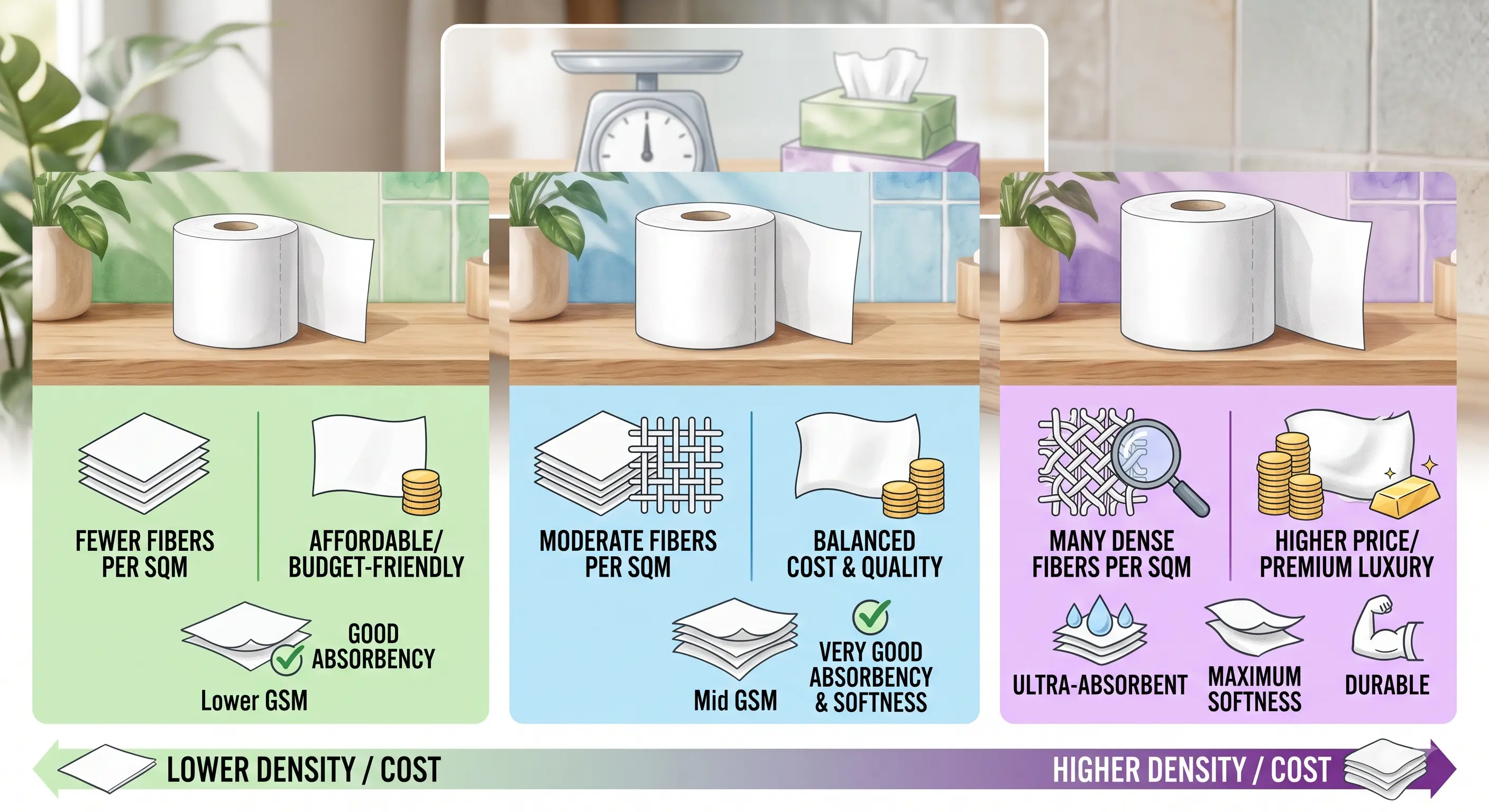
GSM stands for grams per square metre — it's simply the weight of the paper per unit area. If you cut a one-metre square from a roll and weighed it, the GSM is that weight in grams. It's a measure of density and substance, not size or sheet count. A tissue with a higher GSM has more fibre packed into the same area, which typically makes it feel thicker and more substantial in hand.
GSM vs. ply: two different things
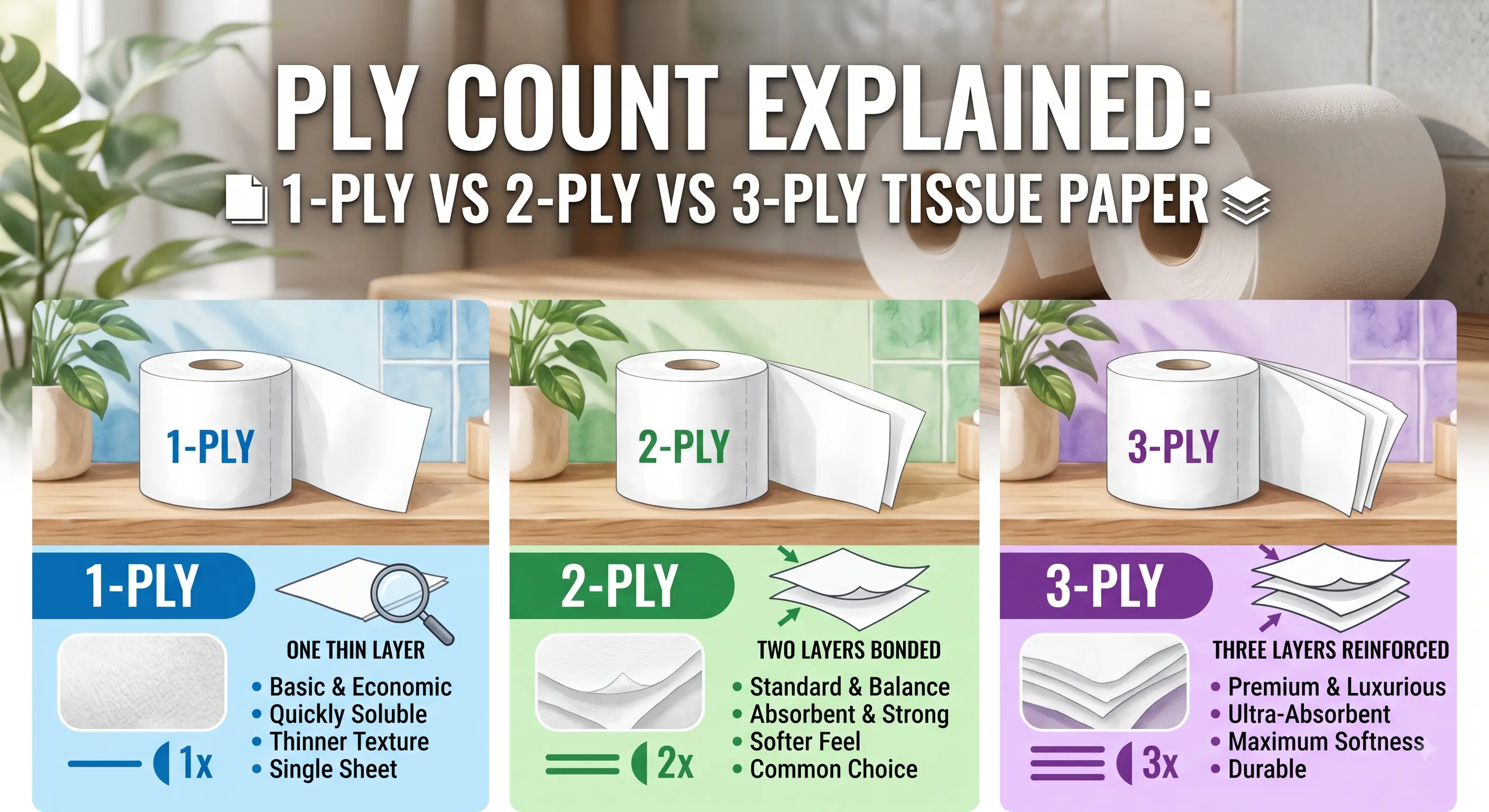
It's easy to conflate GSM with ply because both relate to "thickness," but they measure different things. Ply is the number of layers bonded together. GSM is the weight of the finished sheet, layers included. Two 2-ply products can have noticeably different GSM depending on how much fibre goes into each layer — which is why ply count alone is an incomplete spec. When comparing products, ask for both figures together.
Why higher GSM isn't automatically "better"
A higher GSM sheet generally costs more to produce, since more raw material goes into every square metre. It can also change how a tissue behaves — a denser sheet sometimes trades a little softness for added bulk, and doesn't automatically mean better absorbency, since fibre type and processing affect that just as much as weight. The "right" GSM depends on what the paper needs to do: a lightweight, lower-GSM sheet can be perfectly adequate for high-frequency use, while guest-facing areas often benefit from the fuller feel of a higher-GSM product.
How to compare GSM fairly across suppliers
GSM is only a meaningful comparison point when the ply count and sheet size are also equal — comparing a 1-ply sheet's GSM against a 2-ply sheet's GSM tells you very little. When you're evaluating quotes from multiple suppliers, standardise the comparison: same ply, same approximate sheet dimensions, then look at GSM alongside price per carton. This gives you a genuine apples-to-apples read on value rather than being swayed by a single impressive-sounding number.
Practical Tip
Don't ask a supplier for GSM in isolation — ask for GSM, ply, and sheet dimensions together on every quotation. That combination gives you a far more reliable picture of what you're actually paying for than any single number, and it makes it much harder for a low headline price to hide a lighter-than-expected sheet.
Requesting GSM specs when sourcing
If a supplier can't readily quote GSM alongside ply, treat that as a signal to ask more questions before committing to volume. Reputable manufacturers test and control GSM as part of routine quality checks, so the figure should be available without hesitation. It's also worth requesting a physical sample rather than relying on the spec sheet alone — GSM tells you the weight, but only your hands can confirm how that translates into feel and performance for your specific use case.
At Shree Enterprise, our White Pearl tissue paper and White Leaf toilet paper rolls are manufactured to consistent, clearly stated GSM and ply specifications, so you know exactly what you're ordering every time. If you'd like GSM and ply details for your requirement, get in touch for a quote and we'll walk you through the options.