"Ply" is one of the first specifications you'll see on any tissue paper listing, and it's also one of the most misunderstood. It simply refers to the number of thin paper layers bonded together to make a single sheet. But that one number quietly affects softness, strength, absorbency and — importantly for bulk buyers — cost per sheet. Here's how to think about it when you're choosing for your business.
What ply actually measures
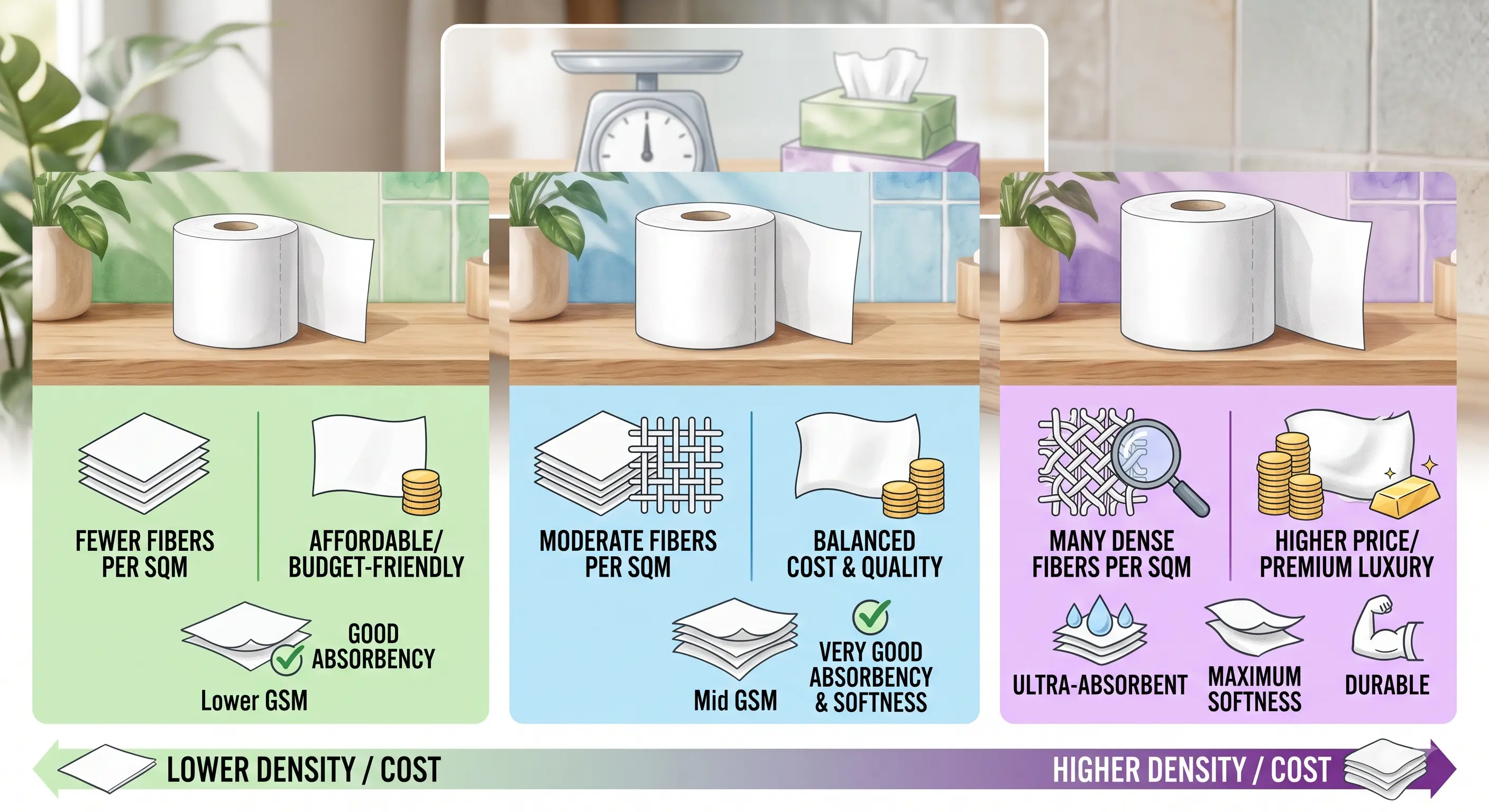
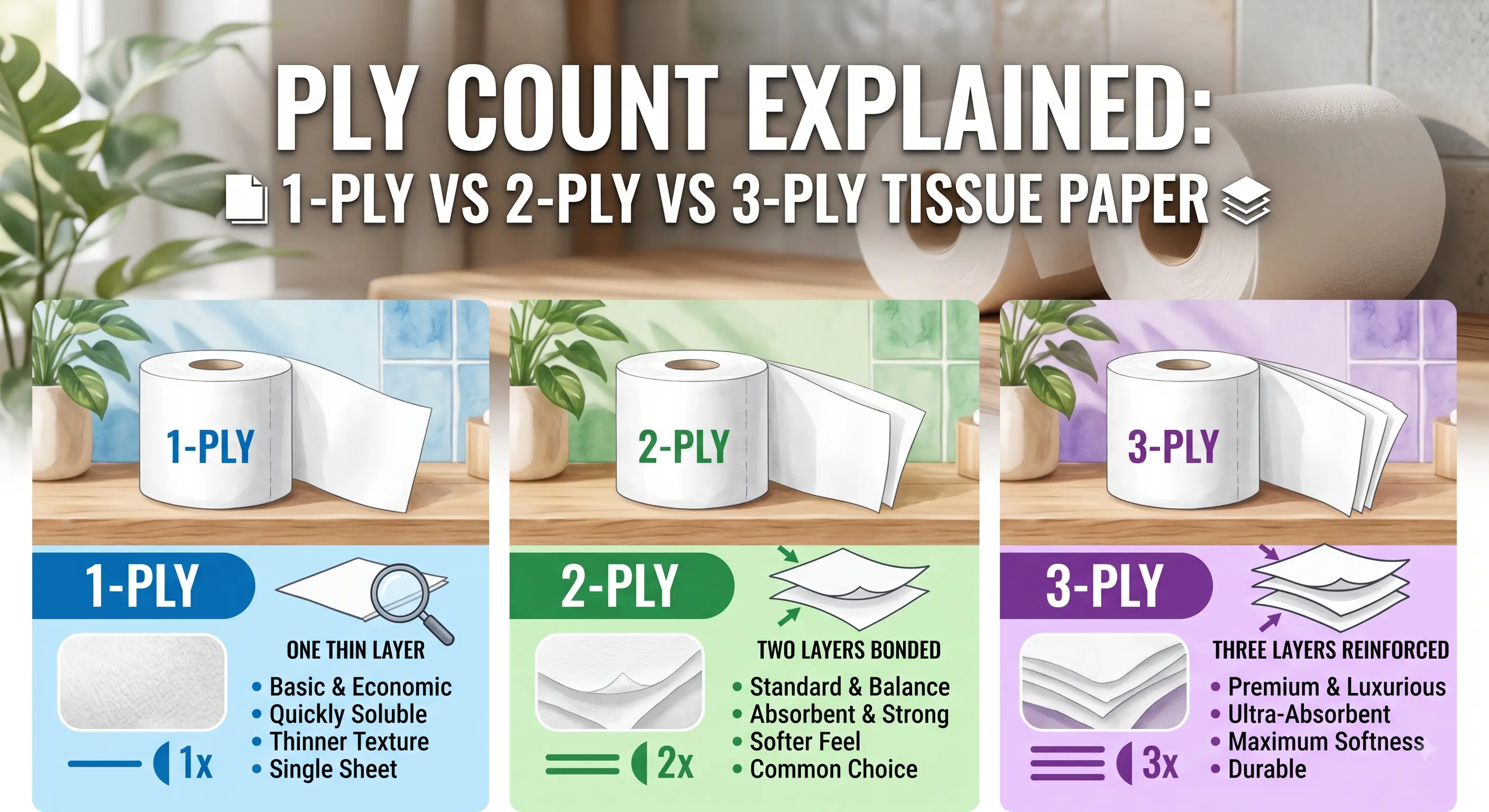
Each "ply" is one layer of tissue. A 1-ply sheet is a single layer; a 2-ply sheet is two layers bonded together; a 3-ply sheet is three. More layers generally mean a thicker, more cushioned sheet, but ply count alone doesn't tell the whole story — the quality of the pulp and the GSM (grams per square metre) of each layer matter just as much. A well-made 1-ply sheet can outperform a poorly made 2-ply one.
1-ply: economical and functional
1-ply tissue is thinner and more cost-effective, making it a common choice for high-traffic settings where volume matters more than plushness — think office pantries, staff washrooms and back-of-house areas. It's perfectly hygienic and functional; it's simply built for frequency of use rather than a premium feel.
2-ply: the everyday business standard
2-ply strikes the balance most businesses land on. It offers noticeably better softness and absorbency than 1-ply without the cost jump of 3-ply, which is why it's the default choice for customer-facing areas like reception washrooms, dining areas and guest-facing spaces in offices and retail outlets.
3-ply: premium comfort for guest-facing spaces
3-ply tissue is the most cushioned and absorbent option, typically reserved for hospitality settings — hotel rooms, fine-dining restaurants and premium retail environments — where the tactile experience contributes directly to how customers perceive quality and care.
Practical Tip
Don't choose ply count in isolation. Match it to the space: back-of-house and high-frequency areas can run efficiently on 1-ply, while anything a customer or guest directly touches usually justifies 2-ply or 3-ply. Many businesses run a mixed order — a leaner option for staff areas and a premium option for guest-facing washrooms — to balance cost and experience.
Ply count and your budget
Because ply directly affects how much raw material goes into every sheet, it's usually the biggest single lever on your per-carton cost. If you're ordering at scale, it's worth requesting samples across ply options and testing them in the actual spaces they'll be used, rather than deciding on the specification sheet alone.
At Shree Enterprise, our White Pearl tissue paper range and White Leaf toilet paper rolls are available across ply options to suit different areas of your business. If you're unsure which ply fits your use case, get in touch for a quote and we'll help you match the right product to the right space.